

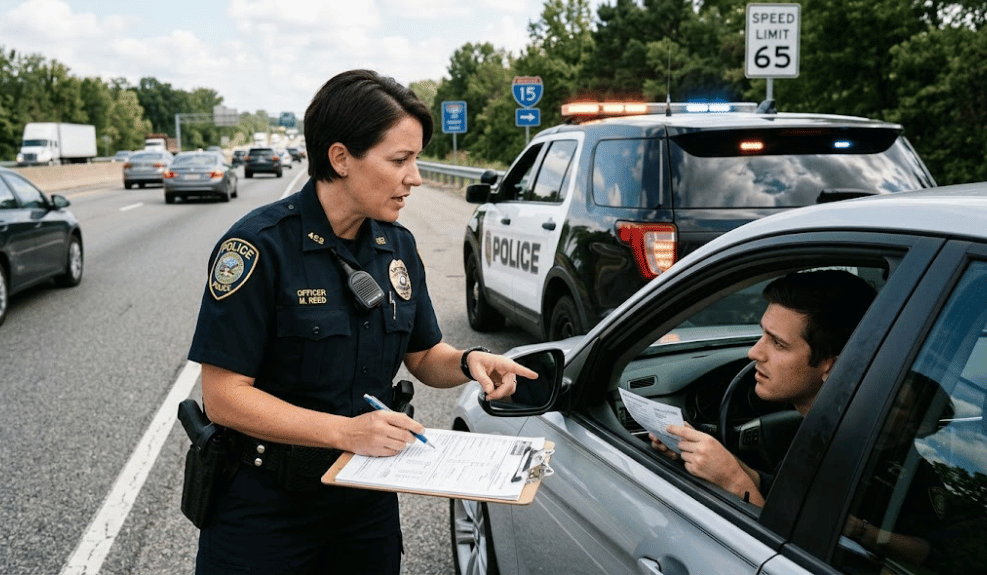
Getting cited for driving too fast does not automatically mean you committed a misdemeanor. Is a speeding ticket a misdemeanor? The answer depends mainly on the state, your speed, and the offense charged.
In many jurisdictions, most ordinary cases are handled as traffic violations or civil infractions. Yet some states treat certain speeding offenses as misdemeanors. Extreme speed may also trigger a separate criminal charge, such as reckless driving.
Direct answer: A speeding citation is not automatically a misdemeanor in the United States. Many states treat ordinary speeding as a noncriminal traffic violation. However, state law can classify excessive speeding or related dangerous driving as a misdemeanor, so drivers must check the statute listed on their citation.
Speeding Citations at a Glance
| Situation | Possible classification | Typical consequence |
|---|---|---|
| Ordinary speeding | Civil or traffic infraction in many states | Fine, points, or traffic school |
| Excessive speeding | Misdemeanor in some states | Criminal charge, fines, and possible jail exposure |
| Speed meeting reckless-driving threshold | Criminal misdemeanor in some states | Court appearance and criminal penalties |
| Speeding with serious aggravating conduct | Potentially more serious criminal offense | Higher fines, license consequences, or incarceration |
| Civil traffic violation | Noncriminal matter | Monetary penalty and possible driving-record effects |
Key Takeaways
- No single nationwide classification exists for speeding offenses.
- State statutes control whether a violation is civil, criminal, or something else.
- Excessive speed can become a misdemeanor even without a crash.
- Virginia and North Carolina provide clear statutory examples of criminal speed-based offenses.
- Nevada converted many minor traffic offenses from misdemeanors to civil infractions.
- The statute number and offense description on your citation matter more than the word “ticket.”
Is a Speeding Ticket a Misdemeanor Under U.S. Law?
No federal rule makes every speeding offense either civil or criminal. States largely create and enforce traffic laws. That means two similar driving speeds can receive different legal classifications across state lines.
Many jurisdictions separate ordinary traffic infractions from criminal traffic offenses. An infraction usually involves fines, points, or another administrative consequence. A misdemeanor is a criminal offense and can carry more serious legal consequences.
BritLegal’s guide to penal meaning and criminal offense classifications explains why statutory grading matters. The label written into state law controls the offense level. A driver should therefore identify the exact statute cited before judging the seriousness.
The Difference Between an Infraction and a Misdemeanor
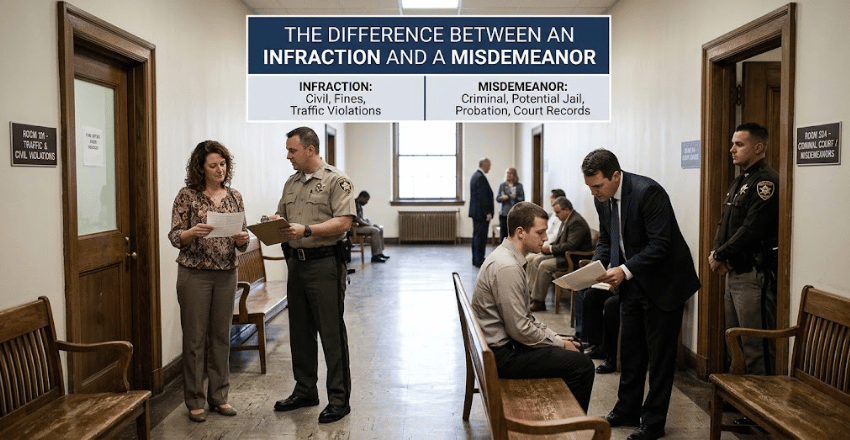
A traffic infraction is generally less serious than a misdemeanor. It often results in a fine rather than possible incarceration. Some states also use terms such as civil violation, petty offense, or traffic violation.
A misdemeanor belongs to the criminal-law system. Depending on the jurisdiction, conviction can involve fines, probation, court requirements, or possible jail time. The maximum sentence depends on the particular misdemeanor class and state statute.
This distinction also affects how a case moves through court. Civil traffic matters may use simplified procedures. Criminal cases generally provide the procedural protections associated with criminal prosecutions.
When Can a Speeding Ticket Become a Misdemeanor?
Can a speeding ticket become a misdemeanor when a driver goes far above the limit? In some states, the answer is yes. Legislatures can create specific speed thresholds that change the classification.
North Carolina provides a direct example. State law makes driving more than 15 mph above the limit, or above 80 mph, a Class 3 misdemeanor. The statute therefore turns specified excessive speeding into a criminal offense.
Other states use reckless-driving laws instead. The speeding conduct may trigger a different criminal offense rather than a charge simply labeled “speeding.” Reading the statute cited on the ticket helps identify which rule applies.
Virginia: Excessive Speed Can Become Reckless Driving
Virginia law provides one of the clearest examples. A driver commits reckless driving under Virginia law by exceeding the limit by at least 20 mph. Driving faster than 85 mph can also satisfy the statute regardless of the posted limit.
That distinction matters because reckless driving is not an ordinary traffic infraction. Under Virginia law, the driver faces a criminal offense. A citation that looks like a traffic matter can therefore carry much greater consequences.
Drivers should not assume that paying the amount shown ends every criminal issue. The required procedure depends on the charged offense. Court instructions on the citation should be read carefully.
North Carolina: State Law Creates a Misdemeanor Threshold
North Carolina takes another direct approach. Its statute expressly labels certain excessive speeding as a Class 3 misdemeanor. The threshold includes driving more than 15 mph above the limit or exceeding 80 mph.
This rule shows why broad online answers can mislead drivers. A statement saying all speeding citations are civil would be wrong in that jurisdiction. The exact speed and statutory subsection can change the result.
North Carolina also has separate rules for other dangerous driving conduct. More serious facts can lead to different criminal charges. Each offense must therefore be evaluated separately.
Nevada Shows That State Classifications Can Change
Traffic classifications are not permanent. Nevada enacted legislation that changed many minor traffic offenses from misdemeanors to civil infractions. Those changes demonstrate why older online guidance can become inaccurate.
Nevada’s current civil-infraction system also has specific court procedures. State court rules define civil traffic infractions separately from misdemeanor, gross-misdemeanor, and felony offenses.
A driver should therefore check current law rather than relying on an old forum post. Legislative changes can affect classifications, penalties, and court procedures. Current official statutes are usually the safest place to start.
What Factors Can Make Speeding More Serious?
Speed alone is only one consideration. State laws may impose greater consequences when dangerous circumstances accompany the violation. The exact elements vary significantly by jurisdiction.
Common factors that can increase legal exposure include:
- Driving far above the posted limit
- Meeting a statutory reckless-driving threshold
- Racing or speed competition
- Fleeing or attempting to elude police
- Speeding while impaired
- Causing serious injury or death
- Violating rules for certain commercial vehicles
- Speeding in designated school or work zones
The added conduct may create a separate offense rather than upgrade ordinary speeding. For example, North Carolina separately criminalizes speeding while fleeing law enforcement. Aggravating factors can make that conduct significantly more serious.
BritLegal’s explanation of discretion in U.S. law provides useful background on official decision-making. Police and prosecutors may have choices within legal boundaries. They cannot change the statutory classification that the legislature established.
Does a Misdemeanor Speeding Charge Create a Criminal Record?
A criminal conviction can have different consequences from a civil traffic finding. Whether it appears on a particular background check depends on state reporting rules and the search performed. Drivers should not assume every database treats traffic offenses the same way.
A noncriminal infraction generally does not become a criminal conviction merely because police issued the citation. A misdemeanor conviction, by contrast, is a criminal adjudication. This distinction can matter for licensing, insurance, employment, or later court proceedings.
Record consequences vary enough that state-specific advice is important. Expungement and sealing rules also differ by jurisdiction. A local attorney can explain how a particular conviction is recorded.
How Can You Tell What Your Citation Charges?
Start by reading the entire citation rather than focusing on the fine. Look for an offense description, statute number, court name, and appearance instructions. Those details usually reveal more than the informal description used during the traffic stop.
Then search the cited statute on the official state legislature or court website. Check whether the law classifies the offense as an infraction, misdemeanor, reckless driving offense, or another category. Confirm that you are reading the current version.
Also check whether a personal court appearance is required. Do not assume online payment is available for every charge. Criminal traffic cases may follow different procedures from routine traffic matters.
Should You Hire a Lawyer for a Criminal Speeding Charge?
Routine civil citations often do not require criminal-defense representation. A misdemeanor allegation deserves closer attention because the potential consequences are greater. Legal advice becomes especially useful when a citation references reckless driving or another crime.
A lawyer can review the statute, speed evidence, officer records, and available defenses. Counsel can also explain possible license effects and court procedures. Practical options depend on the jurisdiction and the facts of the case.
BritLegal’s broader criminal-law materials explain how criminal charges differ from civil disputes. Its guide to criminal punishment and offense grading is a useful starting point. Individual legal advice should still come from a licensed attorney in the relevant state.
What to Do After Receiving a Speeding Citation
First, preserve the citation and note every response deadline. Missing a required appearance can create additional problems. Do not ignore the document because the alleged violation seems minor.
Second, identify the statute and offense classification. Use an official state source whenever possible. Compare the charged speed with any threshold stated in that law.
Third, consider legal advice if the document identifies a misdemeanor or reckless-driving offense. The same applies when jail is legally possible. Early review can help you understand your options before a deadline passes.
Frequently Asked Questions
Is a speeding ticket a misdemeanor in every state?
No, speeding laws and classifications vary by state. Many ordinary violations are handled outside the criminal system. Other jurisdictions criminalize certain speeds or dangerous circumstances.
The offense listed on your citation is the best place to start. Search the listed statute using an official state website. Do not rely on another state’s rules.
Can speeding alone lead to a misdemeanor?
Yes, it can in certain jurisdictions. North Carolina expressly makes specified excessive speeding a Class 3 misdemeanor. Virginia can treat qualifying speed as criminal reckless driving.
Neither rule applies nationwide. Another state may classify similar conduct differently. Local law controls the result.
Is reckless driving the same as a normal speeding violation?
Not necessarily. Reckless driving is often a separate offense with different elements and penalties. Speed can sometimes satisfy the reckless-driving statute.
Virginia demonstrates that distinction clearly. Its law specifically defines certain high-speed driving as reckless driving. That classification changes the legal stakes.
Can a civil speeding violation put me in jail?
A purely civil traffic infraction generally does not carry incarceration as its direct penalty. Criminal offenses can create potential jail exposure when the statute authorizes it. The exact penalty must be checked under state law.
Do not determine the classification from the appearance of the citation alone. Read the statute and court instructions. Seek state-specific legal advice when the citation uses criminal language.
The Bottom Line
Most drivers asking this question need one practical answer: check the state statute printed on the citation. Ordinary speeding may be noncriminal, while excessive speed can become a misdemeanor or reckless-driving offense. The dividing line varies by jurisdiction.
Current state law matters more than a nationwide rule of thumb. North Carolina and Virginia show how speed thresholds can create criminal exposure. Nevada shows how legislatures can also move traffic offenses into a civil system.
If your citation says misdemeanor, reckless driving, or requires a criminal-court appearance, consider speaking with a local lawyer. Bring the citation and any related documents to that consultation. That gives counsel the information needed to identify the actual charge.