

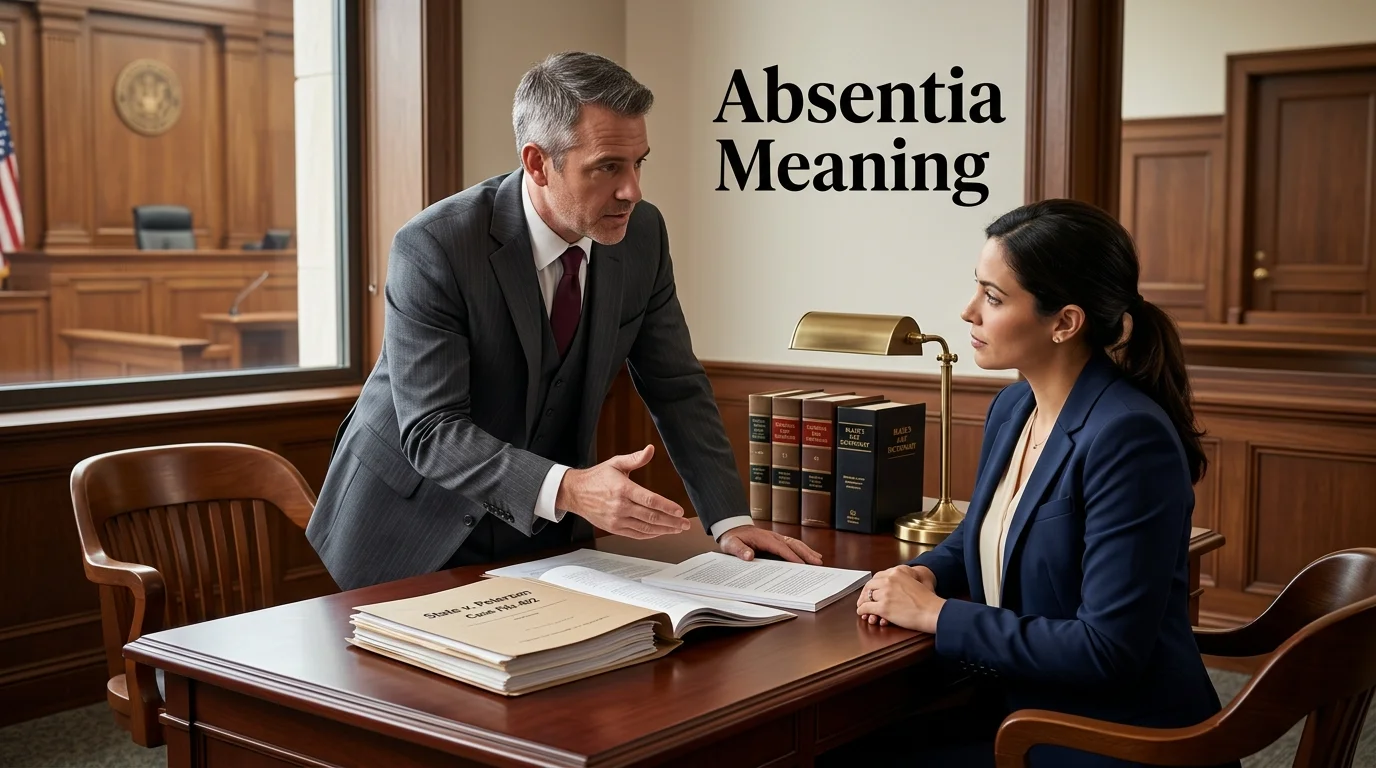
The absentia meaning that matters in a courtroom is narrower than the dictionary version. Latin gives us the literal sense: simply “in the absence of.” American law then adds a hard rule. Some absences a judge will tolerate, and others stop everything. Elsewhere on the site: Wanton Meaning in U.S. Law.
Most people meet the phrase in one of two places. Either a court moved ahead without someone, or a university handed out a diploma to an empty chair. This guide covers both, starting with the version that carries real consequences.
Short answer: The phrase means an event happened without the person it concerned. A judge can finish a criminal trial after the defendant walks out. Graduates receive degrees while overseas. Prizes go to people who could not attend. Nothing about the outcome changes because the person was missing.
TL;DR: Key Takeaways
- Latin for “in the absence of,” used whenever something happens without the person concerned.
- Federal courts may finish a criminal trial if a defendant who showed up then leaves voluntarily.
- Skipping the very first day is different, and it blocks the whole process.
- A conviction reached without you still carries a sentence, a record, and usually a warrant.
- Outside court, the phrase is harmless and covers degrees, awards, and honours.
Where the Phrase Shows Up
| Setting | What it signals | Who decides | What it changes for you |
|---|---|---|---|
| Criminal trial | Proceedings continued without the defendant | Trial judge | A verdict, a sentence, and often a bench warrant |
| Civil case | A default judgment after a party ignores the suit | Judge or clerk | Money owed, plus collection against wages or accounts |
| Graduation | A degree conferred while the graduate is elsewhere | University registrar | Nothing, the diploma is identical |
| Awards and honors | A prize accepted by someone else, or nobody | Awarding body | Nothing, the honour stands |
| Immigration hearing | A removal order issued after a missed hearing | Immigration judge | A removal order that is hard to reopen |
The Latin Behind It
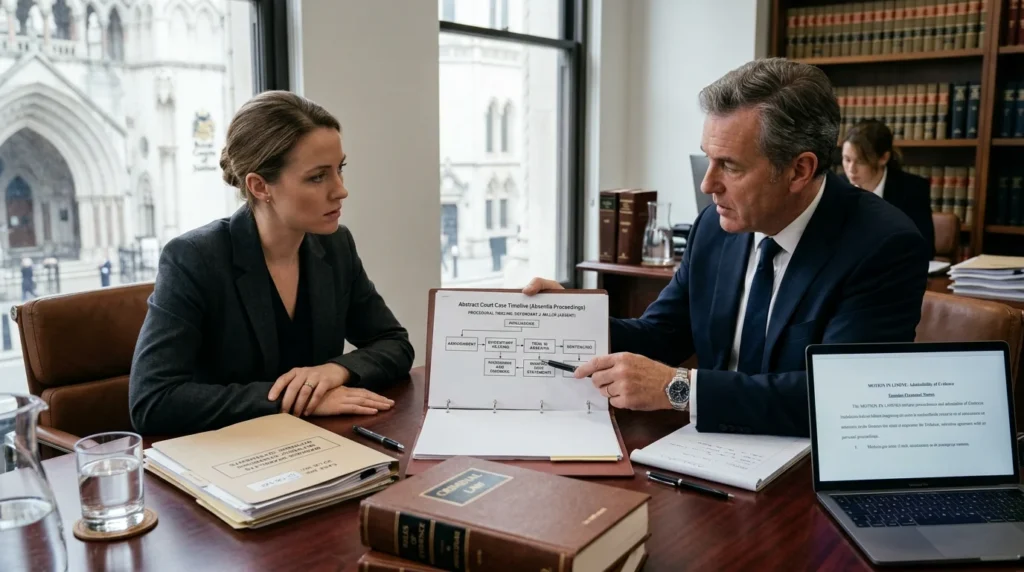
Roman law gave English a stack of phrases that survived because they were compact. This one joins in with absentia, the noun form of absence. Lawyers kept it for the same reason doctors kept Latin anatomy. One short phrase replaces a clause.
You will see it written in italics in older opinions and plain in modern ones. Both are correct. Courts stopped worrying about the styling decades ago.
Absentia Meaning in a Criminal Trial
Here the phrase stops being decorative. A defendant has a constitutional right to face the witnesses against him, so his physical presence is the default, not a courtesy.
Federal practice sets that default in Rule 43 of the Federal Rules of Criminal Procedure. Presence is required at arraignment, at every stage of trial, and at sentencing. Rule 43(c) then carves out the exception that matters most. Once a defendant who was present at the start leaves voluntarily, the trial may run to completion, verdict and sentencing included. That is the language of the published text of Rule 43, which also lets misdemeanours punishable by 12 months or less proceed on written consent.
Read that carefully, because the wording does a lot of work. Voluntary is the hinge. Someone in a hospital bed has not waived anything. Someone who heard the jury being sworn and then drove home has.
One more limit deserves attention. Nothing in this rule lets a judge sentence a defendant who has never been convicted, and nothing lets a case start over quietly. Prosecutors still carry the same burden of proof to the same jury.
Why Skipping Day One Changes Everything
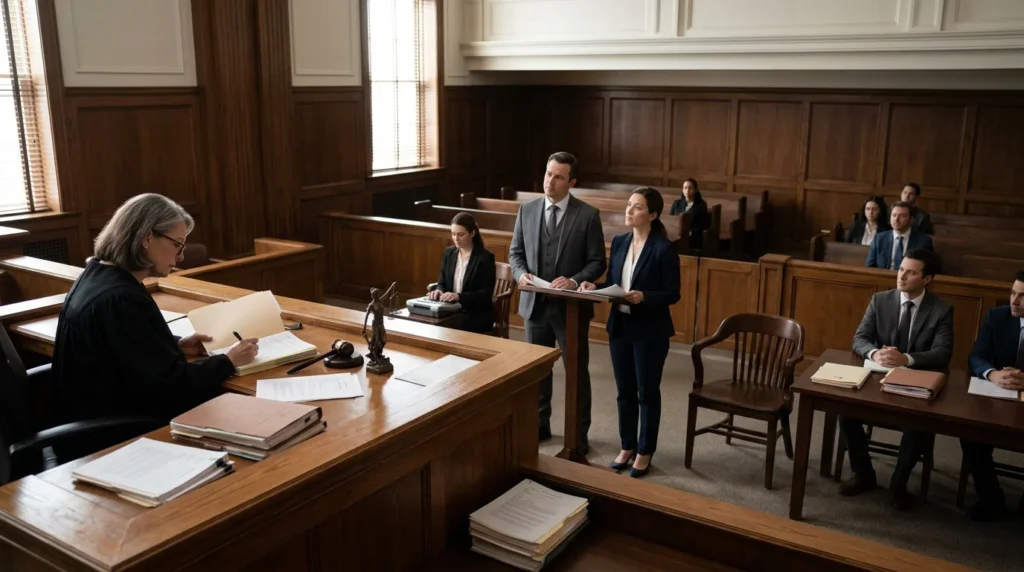
Courts draw a sharp line at the start of trial. Walk out in the middle, and you are treated as having given up your seat. Never take the seat at all, and the case cannot begin without you.
The Supreme Court settled this for federal cases in Crosby v. United States, decided in 1993. That defendant vanished before jury selection, and the trial went ahead anyway. That conviction did not survive review, because the rule permits continuing a trial rather than starting one in the defendant’s absence.
State courts vary in the details. Many follow the federal line closely, while some allow more if a judge finds the defendant deliberately hid. Our criminal law explainers break down how individual states treat a missed first appearance.
What a Conviction Without You Actually Changes
People assume a judgment reached in their absence is somehow provisional. It is not. Three things follow immediately.
- Sentence. It is imposed, and it stands, exactly as if you had been sitting there.
- Warrant. Failing to appear is usually its own offense, so a bench warrant tends to issue alongside the verdict.
- Appeal clock. Deadlines run from the judgment date, not from the day you find out about it.
That last point catches people hardest. Someone who learns about a conviction a year later may find the ordinary appeal window long gone. What remains is narrower, such as a motion to reopen or a claim that notice never arrived.
Civil cases run on a separate track with a softer name. Ignore a lawsuit, and you get a default judgment, which lands with the same force as a verdict. A $12,000 debt claim can become a $12,000 judgment without a single hearing. Wages can be garnished and bank accounts frozen. Many people discover the case only at that point, which is why service-of-process rules exist and why courts take a failed delivery seriously.
Degrees, Awards, and Everyday Uses
Step outside the courthouse and the tension disappears. Students posted overseas graduate without walking across the stage. Novelists too ill to travel win prizes collected by an editor. Nobel and Pulitzer records include recipients who were absent, imprisoned, or already dead.
Nothing is diminished in these cases. Universities treat the conferral date as the real event, and the ceremony as theatre around it. Use the phrase here, and you are simply noting that the honoree was elsewhere.
How Other Countries Handle It
American practice sits at the protective end of the spectrum. Several European systems are far more willing to try a person who never appears, provided a lawyer represents them and the judgment can be reopened on their return.
France and Italy have both operated versions of this for decades. International tribunals go the other way and mostly refuse, on the view that a defendant facing charges of that gravity must hear the evidence. If you are dealing with a foreign judgment, that reopening right is the first thing to check.
If You Have Already Missed a Court Date
Acting quickly matters more than the excuse itself. Judges see genuine emergencies constantly, and they respond to speed.
- Call the clerk of court today and ask what happened on your date.
- Find out whether a warrant issued before any traffic stop finds it for you.
- Gather proof of why you missed it, such as hospital records, a work order, or a crash report.
- Ask about a motion to vacate the judgment or quash the warrant, which many courts hear quickly.
- Arrange representation before you walk in, since arriving with counsel changes the tone of the hearing.
- Write down every future date and set two reminders for each one.
Getting the Right Help
Two very different situations share this label. One is a ceremony you happened to miss. Another is a court file with your name on it, and a warrant attached, and only one of those needs urgent attention.
If a hearing went ahead without you, treat the calendar as the enemy and move first. You can find a lawyer by practice area and bring every notice you received to that first conversation.
Frequently Asked Questions
Something happened without the person it involved. A trial finished, a degree was conferred, or a prize was handed over while they were elsewhere.
Rarely in a criminal court, because notice is required. Civil default judgments are different, and people do learn of them only when wages are garnished.
No. Voluntary departure after the trial starts waives your right to be there, and the judge can go all the way to sentencing.
Not at all. The diploma, the transcript, and the conferral date match everyone else’s.
Sometimes. Fast action, proof that the absence was involuntary, or proof that notice failed all give a judge room to reopen it.