
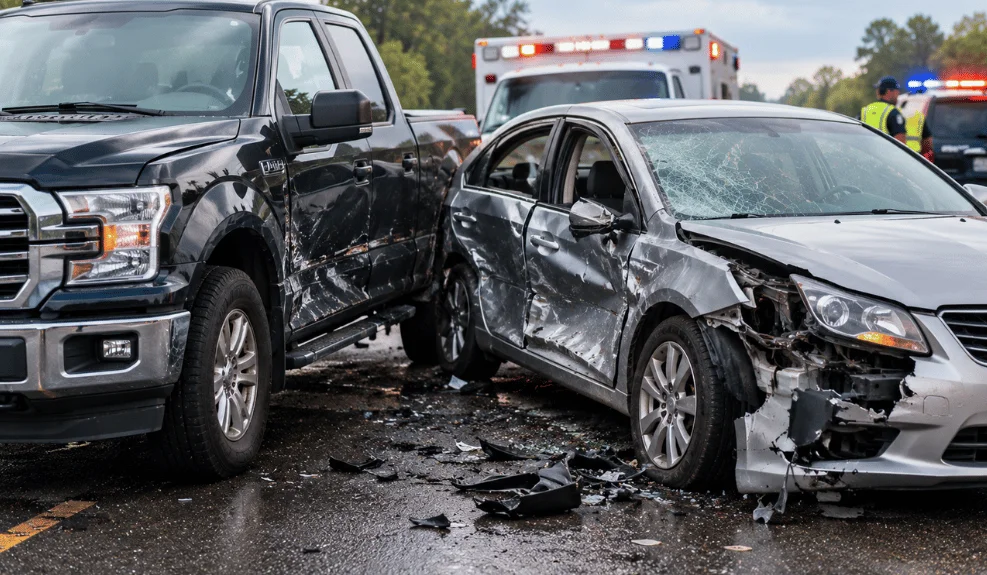
A t bone car crash happens when one vehicle’s front strikes another vehicle’s side. These collisions often occur at intersections, where right-of-way disputes can become central to an insurance claim. Fault usually depends on traffic rules, witness evidence, signals, vehicle data, and each driver’s actions.
A side impact can also cause serious injuries because vehicle doors provide less crash protection than front structures. In 2024, side impacts accounted for 22% of U.S. passenger vehicle occupant deaths, according to IIHS. Knowing what to do afterward can protect both your health and your legal position.
T-Bone Crash Facts at a Glance
| Question | Key point |
|---|---|
| What is a T-bone collision? | One vehicle’s front strikes another vehicle’s side. |
| Where do these crashes happen? | Intersections, left turns, stop signs, driveways, and parking areas |
| Who is usually responsible? | Often the driver who violated the right-of-way |
| Is the striking driver always liable? | No; vehicle position alone does not determine fault. |
| What evidence matters? | Photos, video, witnesses, police reports, vehicle data, and medical records |
| Can both drivers share fault? | Yes, depending on state negligence rules. |
| What damages may be available? | Medical costs, lost income, property loss, and other state-allowed damages |
| When should you seek legal advice? | Disputed fault, significant injuries, or major financial losses justify closer review. |
A T-bone collision does not automatically make the driver who struck the other vehicle legally responsible. Investigators usually examine which driver had the right-of-way and whether either driver violated traffic rules. Evidence from cameras, witnesses, vehicles, police records, and the crash scene can determine how liability is divided.
Key Takeaways
- Right-of-way usually matters more than which vehicle made physical contact first.
- Running a red light or stop sign can provide strong evidence of negligence.
- Unsafe left turns are another common source of side-impact crashes.
- Fault may be divided when both drivers contributed to the collision.
- Side impacts can cause significant head, chest, spinal, and orthopedic injuries.
- Prompt evidence preservation can become critical when drivers give conflicting accounts.
- State law controls how shared fault affects an injured person’s compensation.
- Serious or disputed claims may justify advice from a licensed attorney in your state.
What Is a T-Bone Collision?
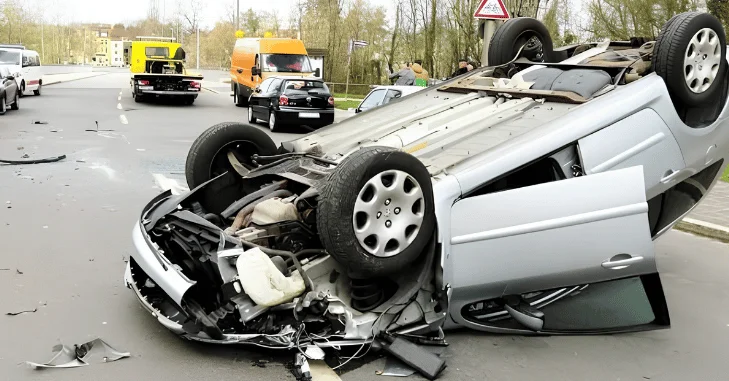
A T-bone collision is a side-impact crash that creates a rough “T” shape between two vehicles. One vehicle typically strikes a door or side panel on the other vehicle. The term “broadside collision” describes the same general crash pattern.
These accidents frequently occur where two traffic paths cross. Common locations include signal-controlled intersections, four-way stops, parking entrances, and roads involving left turns. A driver entering another vehicle’s lawful path can cause a severe impact within seconds.
Vehicle design also explains why these accidents deserve attention. IIHS uses a 4,200-pound moving barrier traveling 37 mph during its updated side-impact test. The test represents a modern SUV striking the driver’s side of another passenger vehicle.
Who Is at Fault in a T Bone Car Crash?
The driver who failed to follow the applicable right-of-way rule is often primarily responsible. That could involve running a red light, ignoring a stop sign, or making an unsafe turn. Still, the facts must support the conclusion rather than the location of vehicle damage alone.
Consider a driver turning left across two lanes of oncoming traffic. That driver might be responsible after entering the path of a vehicle with the right-of-way. The analysis could change if the approaching driver was speeding or ignored a traffic signal.
Insurance companies therefore examine several sources before accepting liability. Their findings may consider traffic laws, driver statements, physical damage, witness accounts, and available recordings. A police citation can matter, but civil liability may require a broader evaluation.
Common Situations That Cause Side-Impact Accidents
Intersection violations are among the most recognizable causes. A driver may enter after a signal changes or misunderstand which vehicle should proceed first. Poor visibility can make these disputes harder to reconstruct later.
Left-turn collisions create another common pattern. A turning driver generally must wait for a safe opening when crossing opposing traffic. Excessive speed by another vehicle may still affect how responsibility is allocated.
Distracted driving can also contribute to a broadside impact. Looking at a phone can prevent a driver from noticing a signal, stop sign, or approaching vehicle. Alcohol impairment, fatigue, and aggressive driving can create similar risks.
How Evidence Can Establish What Happened
Photos should capture more than damaged bumpers and doors. Photograph vehicle positions, road markings, traffic signals, debris, skid marks, and nearby businesses with cameras. These details may disappear soon after police clear the roadway.
Independent witnesses can become especially valuable when both drivers claim they had a green light. Get names and contact information when conditions safely allow it. Nearby dashcams, doorbell cameras, and commercial surveillance systems may also contain useful recordings.
Modern vehicles may hold electronic information relevant to a serious collision. Depending on the vehicle and circumstances, investigators might examine speed, braking, or related crash data. A qualified professional may need to preserve and interpret that information.
Can Both Drivers Be Responsible?
Yes, two drivers can share legal responsibility for the same collision. U.S. states use different rules for situations where an injured person also contributed to an accident. Those differences can substantially affect the amount someone may recover.
Under comparative negligence, compensation can be reduced according to the injured person’s share of fault. Some states follow pure comparative systems, while others apply modified rules with recovery thresholds. Cornell’s Legal Information Institute explains these basic distinctions.
A smaller group of jurisdictions uses stricter contributory negligence principles. Even limited fault by an injured plaintiff can create major recovery problems under those rules. Because state law varies, nationwide articles cannot accurately predict one person’s outcome.
Why T-Bone Crashes Can Cause Serious Injuries
The side of a passenger compartment has less space for absorbing crash energy. Occupants can sit only a short distance from the point of impact. Vehicle speed, size, impact location, seat position, and restraint use can affect injury severity.
IIHS reported 5,047 passenger vehicle occupant deaths involving side impacts during 2024. Those deaths represented 22% of passenger vehicle occupant fatalities that year. The figures show why side-impact safety remains an important part of vehicle crash testing.
Common injuries can include:
- traumatic brain injuries and concussions;
- neck and back injuries;
- spinal cord damage;
- rib and chest injuries;
- pelvic and hip injuries;
- fractures involving arms or legs;
- cuts and facial injuries;
- internal organ injuries.
Head injuries deserve particular attention after a forceful collision. CDC guidance says some concussion symptoms can appear immediately, while others may take hours or days. BritLegal also explains legal and practical issues involving serious brain injuries. BritLegal’s brain injury lawyer guide
What to Do After a Side-Impact Crash
Your priority should be safety and appropriate medical care. Call emergency services when someone appears injured or the scene creates an immediate danger. Follow medical advice rather than trying to evaluate a potentially serious injury yourself.
When conditions permit, preserve information before vehicles leave the scene. Evidence can become harder to obtain after cars are repaired and witnesses disappear. Avoid arguing about blame while collecting factual information.
Useful steps include:
- Move to a safe position when doing so is possible.
- Call 911 when injuries or dangerous conditions require emergency assistance.
- Exchange driver, vehicle, and insurance information.
- Photograph the vehicles and surrounding roadway.
- Collect witness contact details.
- Ask how to obtain the police crash report.
- Report the collision according to your insurance policy.
- Keep medical bills, repair documents, and related records.
- Avoid signing a broad settlement before understanding its effect.
- Seek state-specific legal advice when fault or injuries are significant.
Insurance coverage can affect which benefits become available after the collision. Policy structures and state insurance systems differ across the country. BritLegal’s car insurance overview provides additional background on coverage and claims.
What Compensation May Cover
Potential compensation depends on the jurisdiction, insurance coverage, injuries, and evidence. Economic losses may include medical treatment, rehabilitation, lost wages, vehicle damage, and future care. Serious injuries can also affect someone’s ability to work or live independently.
Some states allow recovery for pain, suffering, disability, or loss of enjoyment. Rules governing those damages differ, and statutory limits can apply in certain claims. Punitive damages may require conduct beyond ordinary negligence.
There is no dependable national “average settlement” that predicts an individual result. A minor injury claim and a permanent spinal injury claim involve completely different losses. Available insurance and provable damages can matter as much as the crash type.
Dealing With the Insurance Company
Report the collision accurately and preserve copies of important communications. Avoid guessing about speeds, distances, medical diagnoses, or facts you cannot remember. An uncertain estimate can later conflict with photographs or recorded data.
Insurers may investigate whether their policyholder bears all or part of the blame. They may also examine whether another driver contributed through speeding, distraction, or another violation. BritLegal’s insurance dispute lawyer guide discusses disputes involving denied or underpaid claims.
Large commercial vehicles can introduce additional insurance and liability questions. Employers, vehicle owners, contractors, or other parties may become relevant in certain cases. Readers facing that situation can review BritLegal’s guide to choosing a truck accident law firm.
When Should You Consider Speaking With a Lawyer?
A minor property-damage accident does not always require legal representation. The need becomes stronger when injuries are serious, liability is disputed, or several parties may share responsibility. Missing evidence or approaching state deadlines can also increase the stakes.
A lawyer may investigate traffic footage, interview witnesses, preserve vehicle data, and review available insurance. Counsel can also calculate documented losses and communicate with insurers during a contested claim. The specific value depends on the facts and applicable state law.
Choose an attorney licensed in the state connected to your accident. Ask about relevant motor vehicle cases, fees, litigation experience, and who will manage your file. Avoid anyone guaranteeing a specific settlement before reviewing the evidence.
Frequently Asked Questions
Who is usually at fault in aT-bonee car crash?
Responsibility usually follows the right-of-way and the conduct that caused the collision. A driver who ran a signal or failed to yield may carry substantial fault. Another driver’s speeding or distraction can still affect the final allocation.
Is the driver who hits the side always at fault?
No, physical impact does not automatically establish legal responsibility. A driver with the right-of-way might strike someone who improperly entered the intersection. Investigators must examine what each driver did before impact.
What injuries are common after a side impact?
Head injuries, fractures, chest trauma, back injuries, and soft-tissue injuries can occur. The struck-side occupant may face significant forces because the impact occurs near the passenger compartment. Medical professionals should evaluate concerning symptoms after a serious collision.
Can I recover compensation if I was partly responsible?
Possibly, but the answer depends on state law. Comparative negligence rules often reduce damages according to a person’s fault percentage. Stricter contributory negligence jurisdictions can produce a different result.
How long do I have to make a claim?
Deadlines vary by state and by the parties involved. Claims involving government vehicles can also have special notice requirements. Check the law governing your accident rather than relying on a general nationwide deadline.
Protect the Evidence and Get State-Specific Advice
A T-bone accident can raise difficult questions about right-of-way, shared responsibility, injuries, and insurance coverage. Strong evidence usually provides a better foundation than assumptions about which vehicle struck first. Preserve records early and keep medical, insurance, and employment documents organized.
U.S. negligence and insurance laws differ significantly between states. A licensed attorney can explain the rules that apply to your accident and available deadlines. That advice is especially useful when injuries are serious, or an insurer disputes responsibility.
Legal information notice: This article provides general U.S. legal information and does not create an attorney-client relationship. It is not a substitute for advice from a lawyer licensed in your jurisdiction.