
If you were injured at a store, apartment complex, hotel, parking lot, or private home, the accident alone does not prove negligence. A claim often depends on who controlled the property, what hazard existed, and whether that danger caused your injury. State laws differ, so the law of the state where the accident occurred matters.
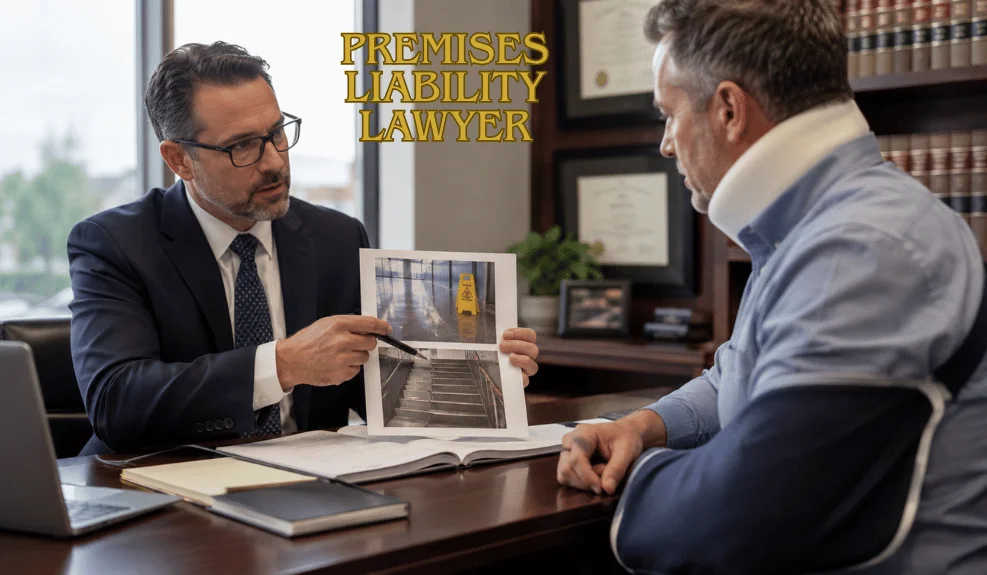
Direct answer: A premises liability lawyer is a personal injury attorney who handles injuries caused by unsafe property conditions. The lawyer investigates who controlled the property, preserves evidence, evaluates negligence and damages, deals with insurers, and files a lawsuit when necessary. You should consider hiring one when your injuries are serious, fault is disputed, or evidence may disappear.
| Question | What to know |
|---|---|
| Main role | Investigate the accident, prove fault, value losses, negotiate, and litigate when necessary |
| Common cases | Falls, unsafe stairs, poor lighting, negligent security, falling objects, and other property hazards |
| Key evidence | Photos, video, incident reports, witness statements, maintenance records, and medical documents |
| Legal fees | Plaintiff-side lawyers often use contingency-fee arrangements |
| Best time to seek help | Early, especially when injuries are serious, or evidence may be lost |
| Filing deadline | Depends on state law and the type of property or defendant |
What a Premises Liability Lawyer Does After a Property Injury
The attorney first determines who owned, occupied, maintained, or controlled the property. That distinction matters because responsibility does not always rest with the title owner. The lawyer may request surveillance footage, inspection records, incident reports, repair records, and prior complaints.
They can interview witnesses and collect medical and income records. They may also communicate with insurers, prepare a settlement demand, and file a lawsuit when negotiations fail. Preserving evidence can be especially important because video footage and business records may not remain available indefinitely.
BritLegal’s insurance attorney guide provides more background on how lawyers review claims and communicate with insurers.
What You Usually Need to Prove
A premises liability claim generally follows negligence principles. The injured person must establish a legal duty, a breach of that duty, causation, and compensable harm. Control of the property and notice of the dangerous condition can also become central issues.
A court may examine whether the responsible party created the hazard, knew about it, or should have discovered it through reasonable care. The injured person must also show that the failure caused the injury.
Visitor-status rules differ across the country. Cornell Law School’s Legal Information Institute sets out how courts separate invitees, licensees, and trespassers, while other states apply a broader reasonable-care standard to everyone lawfully on the property. Premises liability law must therefore be evaluated under the rules of the state where the accident occurred.
When Does Hiring an Attorney Make Sense?
Legal representation deserves serious consideration when an injury requires substantial treatment, the owner disputes responsibility, several parties controlled the property, or an insurer contests the claim. Early legal advice can also help when security footage, maintenance records, or witness evidence could disappear.
A minor incident involving limited losses may not require full representation. The key is to understand the filing deadline, available evidence, and potential damages before deciding.
| Option | Pros | Cons | Best fit |
| Property-injury-focused attorney | Familiar with notice requirements, inspection records, property control, and insurer defenses | Experience and fee terms vary by firm | Serious injuries or disputed liability |
| General personal injury lawyer | May have broad negotiation and litigation experience | May handle fewer property cases | Straightforward claim with relevant prior experience |
| Handle the claim yourself | No attorney fee | Evidence collection, valuation, deadlines, and negotiations fall on you | Limited losses and unusually clear facts |
Verdict: For a serious injury or contested claim, start with an attorney who regularly handles accidents caused by unsafe property conditions. A general personal injury lawyer can also be a strong choice if they can demonstrate relevant case experience.
How Legal Fees and Case Costs Work
Plaintiff-side injury attorneys often use contingency-fee arrangements, meaning the lawyer’s fee depends on obtaining a recovery. That does not mean every financial arrangement is identical. ABA Model Rule 1.5 states that a contingent-fee agreement must be in writing and signed. It should explain how the fee is calculated and how litigation expenses affect the client’s recovery.
State rules can impose additional requirements. Ask whether costs are deducted before or after the attorney’s fee is calculated. You should also ask who pays expenses if the case results in no recovery.
For broader information about lawyer involvement in contested claims, see BritLegal’s insurance dispute lawyer guide.
Evidence to Preserve Before Your First Consultation
| Evidence | Why it can matter |
| Photos and video | Show the hazard and surrounding conditions |
| Incident report | Documents when and where the accident was reported |
| Witness details | Help confirm the condition and sequence of events |
| Shoes, clothing, or damaged items | May become physical evidence |
| Medical records and bills | Connect the accident with treatment and losses |
| Wage and expense records | Help document financial damages |
| Property or insurer messages | Preserve statements, dates, and claim history |
Keep original files whenever possible. An attorney may seek additional material from the property owner, such as surveillance footage, inspection logs, maintenance records, or earlier complaints.
If the injury resulted from medical treatment rather than a dangerous property condition, it may involve a different type of negligence claim. BritLegal’s medical liability lawyer guide explains that distinction.
6 Questions to Ask Before Hiring
- How many similar property-injury cases have you handled in my state?
- Who will manage my case and communicate with me?
- What evidence would you try to preserve first?
- What facts could weaken or defeat my claim?
- How are attorney fees and case expenses calculated?
- What would make you recommend settlement instead of filing a lawsuit or taking the case to trial?
Specific answers are more useful than promises about an outcome. No lawyer can guarantee a particular settlement or verdict.
Compensation and Filing Deadlines
Depending on state law and the available evidence, recoverable losses can include medical expenses, lost income, future treatment costs, and compensation for pain or other personal harm. The injury must result in actual damages; a dangerous condition without resulting harm is generally not enough.
Deadlines also depend on the jurisdiction. Claims involving public property may have different notice procedures or shorter effective timelines. Getting local legal advice early can help protect your right to file a claim and preserve time-sensitive evidence.
Your Next Step
If your injuries are significant or responsibility is disputed, shortlist two or three licensed attorneys in the state where the accident occurred. Bring your timeline, photographs, medical records, incident paperwork, and the six questions above.
BritLegal’s Find A Lawyer resources can help you continue your research. Verify any attorney’s current license with the relevant state bar before hiring them.
Frequently Asked Questions
No. Legal representation is most useful when injuries are substantial, liability is disputed, several parties may be responsible, or the insurer challenges the claim. A minor case involving limited damages may be easier to handle without full representation.
Contingency-fee arrangements are common in plaintiff-side personal injury work. The percentage, treatment of case expenses, and payment terms depend on the lawyer and applicable state rules. Review the written agreement before hiring counsel.
Direct knowledge is not always the only issue. A claim may also examine whether the responsible party should have discovered the condition through reasonable inspections or maintenance. The exact notice standard depends on state law.
Depending on the control and contractual duties, possible defendants may include a tenant, property manager, maintenance contractor, security company, or any other party responsible for the dangerous condition. Identifying who controlled the relevant part of the property is often an early part of the investigation.