


Two words sit in a box on your life insurance form, and almost nobody asks what they do. The per stirpes meaning is easier than the Latin suggests. If one of your beneficiaries dies before you, that person’s share drops to their own children instead of spreading sideways to everyone else.
That single choice decides whether your grandchildren inherit anything. Most people tick it without reading. Families then discover the consequences years later, at a funeral or in a claims office, at exactly the moment nobody has the appetite for a legal argument.
Two Ways One Share Can Travel
| Per Stirpes Meaning | By the branch | Per capita | No contingent named |
| All beneficiaries outlive you. | Equal shares as written | Equal shares as written | Equal shares as written |
| One child dies first, leaving kids | Grandchildren split that share | Surviving children absorb it. | Usually the surviving children |
| One child dies first, no kids. | Share goes to the other children. | Share goes to the other children. | Share goes to the other children. |
| Every named person dies first. | Grandchildren inherit by line. | Nothing passes; estate rules apply. | Falls into your estate or state law |
| Where it is written | Beside each name on the form | Beside each name on the form | Left blank |
Key Takeaways
- Latin for “by the branch,” and it keeps a share inside one family line.
- A dead beneficiary’s portion goes to their children, not to your other beneficiaries.
- Per capita does the opposite and reshuffles that portion among the survivors.
- Adopted children count in every state. Stepchildren usually do not unless you adopted them.
- Your beneficiary form outranks your will, so fix the form and not just the will.
What Is Per Stirpes Meaning?
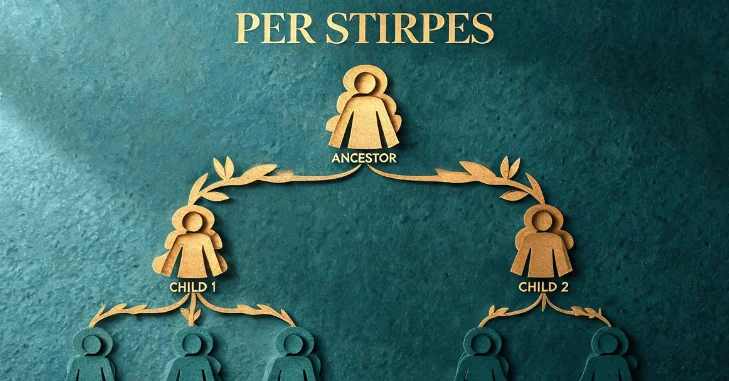
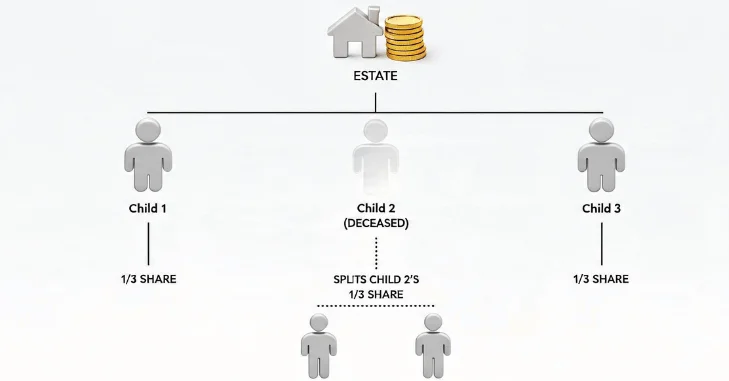
The per stirpes meaning is a beneficiary designation that allows a deceased beneficiary’s share to pass to their descendants. In simple terms, it keeps that person’s portion within their family branch. For example, if one of three children dies before the policyholder and leaves two children, those grandchildren generally divide the deceased parent’s share under a per stirpes designation.
The Latin, and Why Lawyers Kept It
Roman lawyers pictured a family as a tree. Each child starts a branch, and everything growing from that branch belongs to it. The phrase means “by the roots,” and estate drafters kept it because no plain English replacement is as precise.
Some states write the same idea as “by representation,” since the grandchildren represent their dead parent. Treat the two labels as cousins rather than twins, because a handful of states apply slightly different math to the lower generations.
Per Stirpes Meaning in a Beneficiary Form
Insurance companies and retirement plan administrators pay claims straight from the form. No judge reviews it. No family meeting decides it. That is why two small words carry so much weight.
Say your policy pays $600,000 to three children in equal shares. Under this designation, a child who dies before you does not lose the money for their side of the family. Their $200,000 share passes to their own descendants instead. It is not redistributed among the surviving beneficiaries, according to the Legal Information Institute’s entry on the term at Cornell Law School.
Leave the box blank, and the administrator falls back on the contract’s default rule. Most default to per capita, which sends everything to whoever is still breathing.
The Same $600,000 Split Two Ways
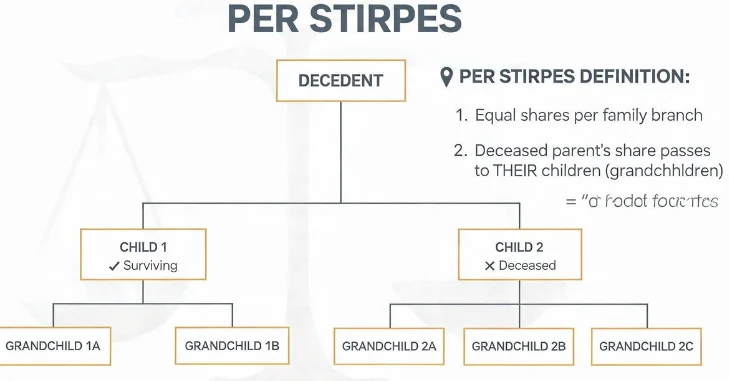
Numbers beat definitions. Picture three children, Ana, Ben, and Maria. Maria dies in a crash two years before you, leaving two young children of her own, and your policy has not been touched since the day you signed it.
- By the branch. Ana takes $200,000, and Ben takes $200,000. Maria’s branch keeps her $200,000, so her two children receive $100,000 each.
- Per capita. Ana takes $300,000, and Ben takes $300,000. Maria’s children receive nothing at all.
Same policy, same family, and a $200,000 swing for two grandchildren. Nobody committed a mistake in the second version either. Someone simply left a box unticked, and the insurer followed its own default.
One detail trips up even careful people. The designation describes what happens to a share, not who receives it first. Your named beneficiaries still collect in full whenever they outlive you, so nothing is handed to a grandchild while their parent is alive.
What to Write on the Form
Vague instructions cause most of the trouble here. Administrators read literally. Give them something literal to read.
- Write each beneficiary’s full legal name, date of birth, and relationship to you.
- Add the phrase directly after each name, as in “Maria J. Ortiz, daughter, per stirpes.”
- State percentages that total exactly 100, since fractions invite disputes.
- Name at least one contingent beneficiary under the primary list.
- Request a stamped confirmation copy, then store it with the policy.
- Review the form after every birth, death, marriage, or divorce.
One more habit saves families real money. Check the beneficiary pages on every account you hold, because a 401(k) from a job you left in 2009 still pays whoever is named on that old paperwork. Our Patent Lawyers: Protecting Innovations, Maximizing Value, and Navigating the Complex World of Intellectual Property covers what to do when an insurer disputes the wording.
Stepchildren, Adopted Children, and Empty Branches
Two questions come up constantly. The answers could hardly differ more. Adopted children are treated as your own everywhere in the United States. An adopted grandchild inherits through their parent’s branch on identical terms to a biological one. Stepchildren are the opposite. Unless you legally adopted them, a stepchild is not your descendant, so no branch exists for them to inherit through. Naming them individually is the only reliable fix.
Empty branches resolve neatly. Should a child die before you, leaving no descendants at all, that branch closes, and the share divides among your remaining children. Nothing is lost, and nothing goes to the state, provided someone in your family survives you.
Which Option Should You Choose for Your Family
So which option should you choose? Start with the shape of your family, not with the Latin. Simple families rarely feel the difference at all. Three healthy adult children, all likely to outlive you, get equal shares under either label.
The branch approach earns its keep in three situations. Grandchildren already exist, and you want them protected. Your children differ widely in age or health. Or one child supports a family while another has none.
Per capita fits a narrower case. Some people genuinely want the money concentrated among survivors, often where the beneficiaries are siblings rather than children, or where one branch is already provided for. Blended families need the most care of all, and our family law coverage digs into how second marriages complicate these forms.
Age gaps matter more than people expect. A parent in their eighties naming children in their sixties faces a real chance that one child goes first. Younger families rarely picture it, though illness and accidents ignore actuarial tables. Ticking the box costs nothing and covers the outcome nobody plans for.
Your Form Beats Your Will
This surprises people more than anything else on the page. A life insurance policy, an IRA, and a 401(k) pass by contract rather than by will. Whatever your will says, the administrator pays the name on the form.
Divorce settlements expose the gap constantly. Someone updates the will, feels organized, and never touches the retirement account. Years later, a former spouse collects $400,000 because the paperwork still says so. Courts can sometimes unwind that, though only after expensive litigation your family should never have needed.
Conclusion
Understanding the per stirpes meaning can help ensure that an inheritance or beneficiary share stays within the intended family line. If a named beneficiary dies before you, their share generally passes to their descendants rather than being divided among the surviving beneficiaries.
Because beneficiary forms can control how life insurance and retirement accounts are distributed, review your designations after major family changes and consider professional legal advice when your family situation is complex.
Apart from that, if you want to know about the article, Family Law News 2026: The Complete State-by-State Guide to Every Major Custody, Child Support, Divorce, and Family Court Law Change in the U.S., then please visit our Family Law Category.
Getting the Wording Right
Nothing here needs a long engagement with a law firm. It needs twenty minutes with your policy documents and a clear head about who you want protected two generations down. Pull every beneficiary form you have, read what each one actually says, and note the blank accounts. Does your family include stepchildren, a second marriage, or a child you worry about? You can find a lawyer by practice area and have the forms reviewed before you sign.
Frequently Asked Questions
A share stays inside one family line. If your child dies first, that child’s children split what their parent would have received.
Nearly. Both keep shares inside a line, though a few states calculate the lower generations differently, so check your own state’s wording.
Not unless you adopted them. Name a stepchild directly on the form if you want them included.
Yes. The designation attaches to each name separately, so one child can carry it while another does not.
The account does, because it pays by contract. Assets moving through your will still go through probate as usual.